
Why Current and Previous METARs Matter at Your Airport and Your Destination
SimpleFBO · October 3, 2026
A METAR is one observation: wind, visibility, ceiling, temperature, dew point, and the flight category that falls out of those numbers. It answers what the field is doing at that minute. The decision to launch is bigger than that minute. It depends on whether conditions are holding or changing, and on both the airport you are leaving and the airport you intend to land at.

The Current Report Is the Snapshot
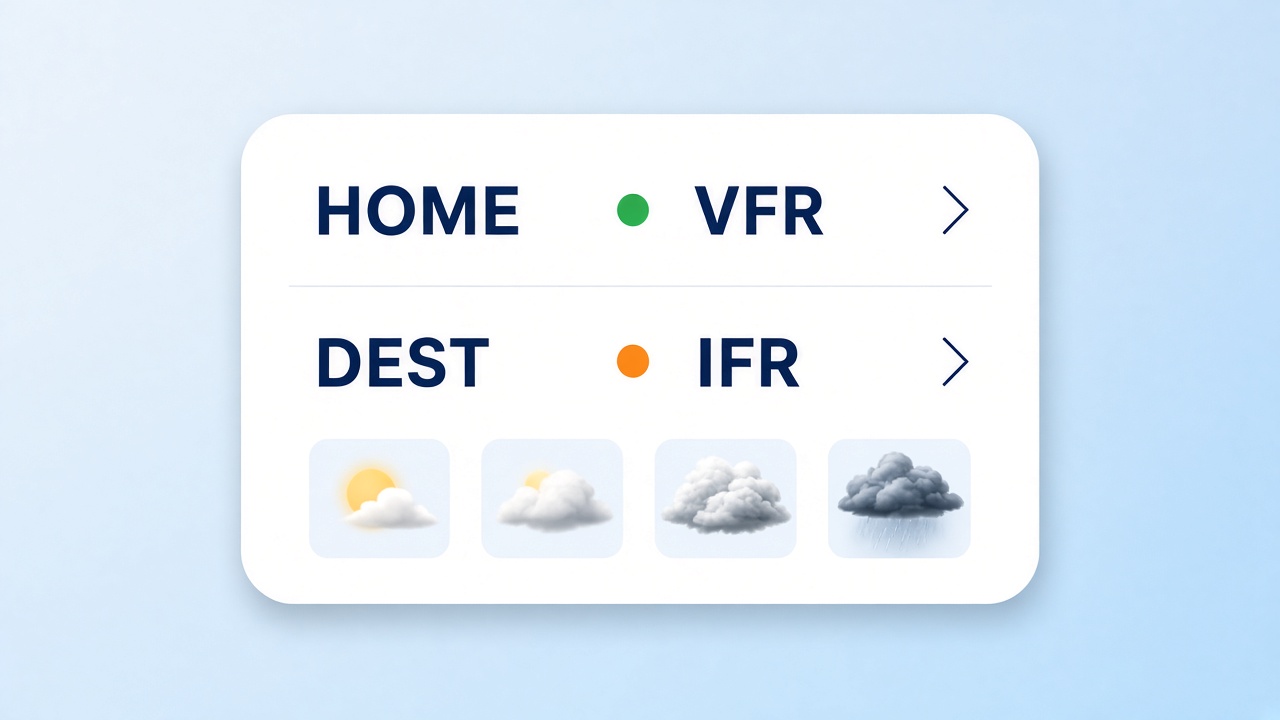
The latest METAR is the one that decides the next hour. At your airport it tells you whether a local flight, a pattern session, or a student solo is sensible right now — the wind against the airplane's crosswind limit, the ceiling and visibility against the minimums you are flying, and how close the temperature and dew point are. At the destination it answers the other half of the same question. A field that is VFR where you are standing can be IFR where you plan to land. For a VFR cross-country, a renter's day trip, or a solo to another airport, the destination's current observation belongs in the launch decision.
Previous Reports Show the Trend
METARs come out about once an hour, and a special report goes out when conditions change enough to matter. One "VFR" reading can mean the field has been VFR all morning. It can also mean the ceiling has been stepping down for three hours and the next report is the one that drops it out of VFR. The reports behind the current one make that difference visible.
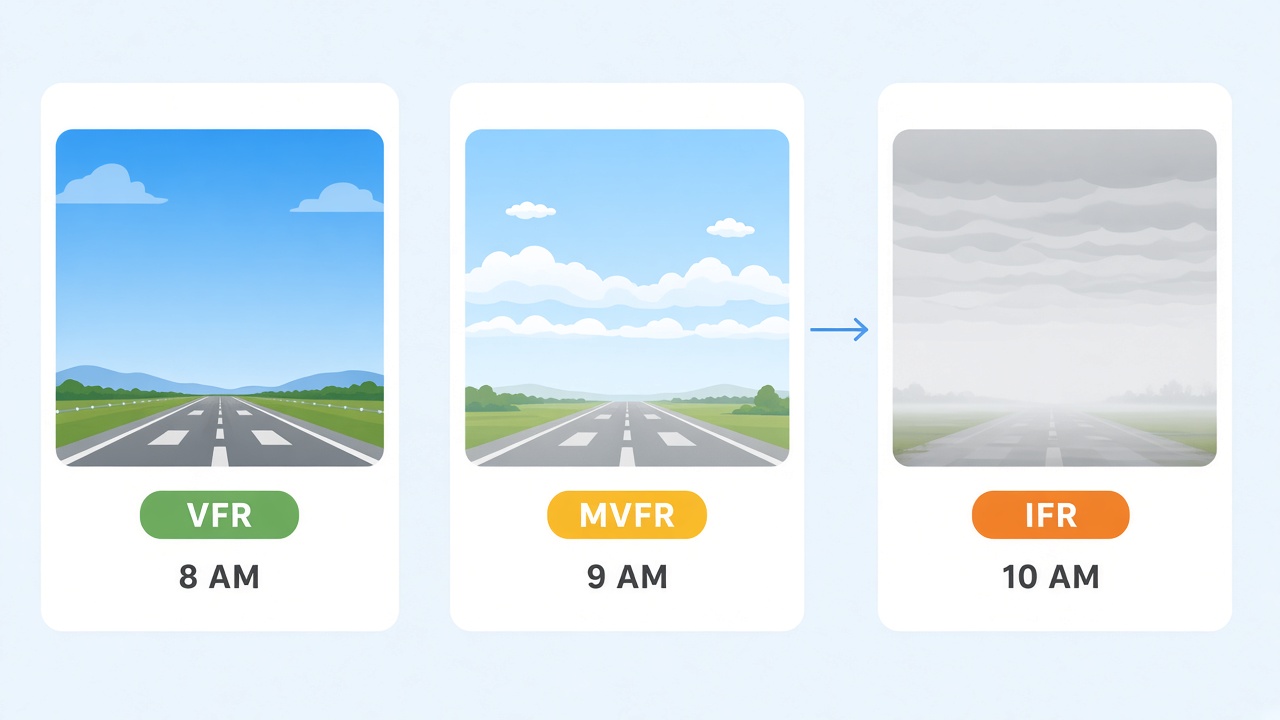
In that history you can see wind building, or gusts that were absent an hour ago, moving toward a crosswind you would not accept. You can see visibility and ceiling moving in one direction: fog burning off is a different plan from a ceiling that is still lowering. You can see the temperature and dew point closing, which is how low ceilings and fog show up before the flight category changes. And you can tell a special observation that was a passing shower from one that became the condition and stayed there.
A TAF says what the forecast expects. The last several METARs say what the atmosphere actually did. When those two agree, the forecast is earning its keep further out. When they diverge, the trend in the observations is the better guide for the next hour or two.
Both Ends of the Flight
Departure weather and destination weather are two separate pictures, and each one has a current report and a history. Your airport governs whether you launch and whether you can come back if the trip shortens. Its history tells you whether the pattern you briefed at 8 a.m. is the pattern you still have at 10. The destination governs whether the landing is still the landing you planned. Its current METAR says what is there now. Its previous METARs say whether that field is improving toward your arrival time or filling in. A destination that has been MVFR and is lifting is a different flight from one that has been VFR and is getting worse.
Seeing them together is the practical part. Looking up two identifiers on a separate weather site — once when the flight is booked, again before launch — is how one of those checks gets skipped. When the reservation already knows both airports, the current category for each one can sit on the trip, and the last day of reports is one tap away.
What Changes in the Decision
A pilot who can see the current METAR and the ones before it, at both airports, catches three things a single home-field lookup misses. A trend at the departure airport, so a field that is still VFR but getting worse is briefed as getting worse. A destination that does not match the departure, so the flight is planned around the more restrictive of the two fields. And a change between scheduling and launch: an observation that was VFR an hour ago and is IFR now is a different flight, and the history is what makes that change obvious before the runup.
SimpleFBO shows your home airport's current conditions on the weather page, with the previous reports from the last 24 hours underneath. On a reservation, the departure airport and the destination each show the current flight category. Open either one for that same day of METARs — wind, visibility, ceiling, and category — so the trend is part of the same decision as the snapshot. See Features for home-field weather and destination airports on every booking.